Checklist / Glossiphoniidae / Haementeria / Haementeria ghilianii
Haementeria ghilianii
· Glossiphoniidae
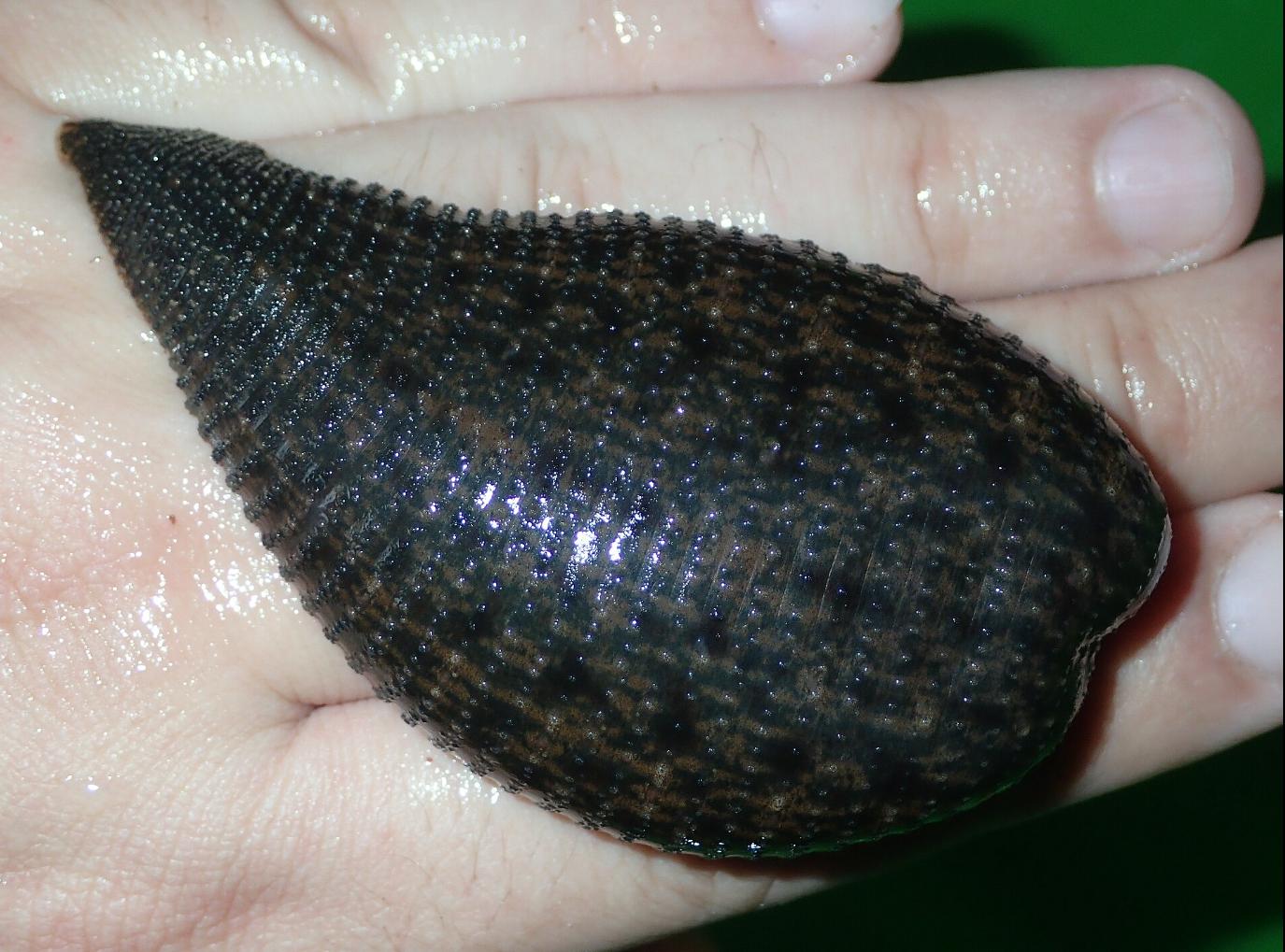
External morphology
A large-sized species, reaching nearly 200 mm in total length. The holotype (from Pará, Brazil) measures 126 mm in length and 52 mm in maximum width; a specimen from the Zurich Museum (studied by Lang, 1890, and subsequently revised by Blanchard, 1893) attains a length of 193 mm with a maximum width of 100 mm; C. Pinto (1923) cites measurements of 135 mm and 53 mm, respectively. The ratio of total length to maximum body width ranges between 1.9 and 2.5. The body is depressed and ovoid, featuring numerous dorsal tubercles whose surfaces are bristling with pointed micropapillae—particularly within the marginal field—with these tubercles numbering between 35 and 40 in a single horizontal row on each ring. The neural or median rings (a2) bear three pairs of segmental papillae or *sensillifera* (variously termed tubercles or "Lang's organs"), which house the sensillae; these are arranged in two paramedian rows, two intermediate or lateral rows, and two supramarginal rows. Each sensilla is situated atop a bar-shaped papilla, positioned either horizontally or slightly obliquely. The rings remain undivided on the dorsal aspect; however, on the ventral aspect, the first and third primary rings of each somite are subdivided such that, on this surface, the somite appears 5-annulate, yielding a segmental formula of (b1 + b2) = (b5 + b6) > a2. Two eyes are present on somite III (rings a1–a2). The mouth is situated on the anterior lip of the cephalic capsule, at the level of somites II/III.
Habitat & range
- Habitat
- Freshwater
- Region
- South America
- Recorded from
- Brazil, French Guyana
Original description
FillipiI, F. D. 1849. Uber eine neue riesengrosse Egelart. Z. Wiss. Zool. 1: 256-257
Sources used for this page
Picture: Wikipedia